
The Different Types of Dental Bridges: Fixed, Cantilever, and Maryland Explained
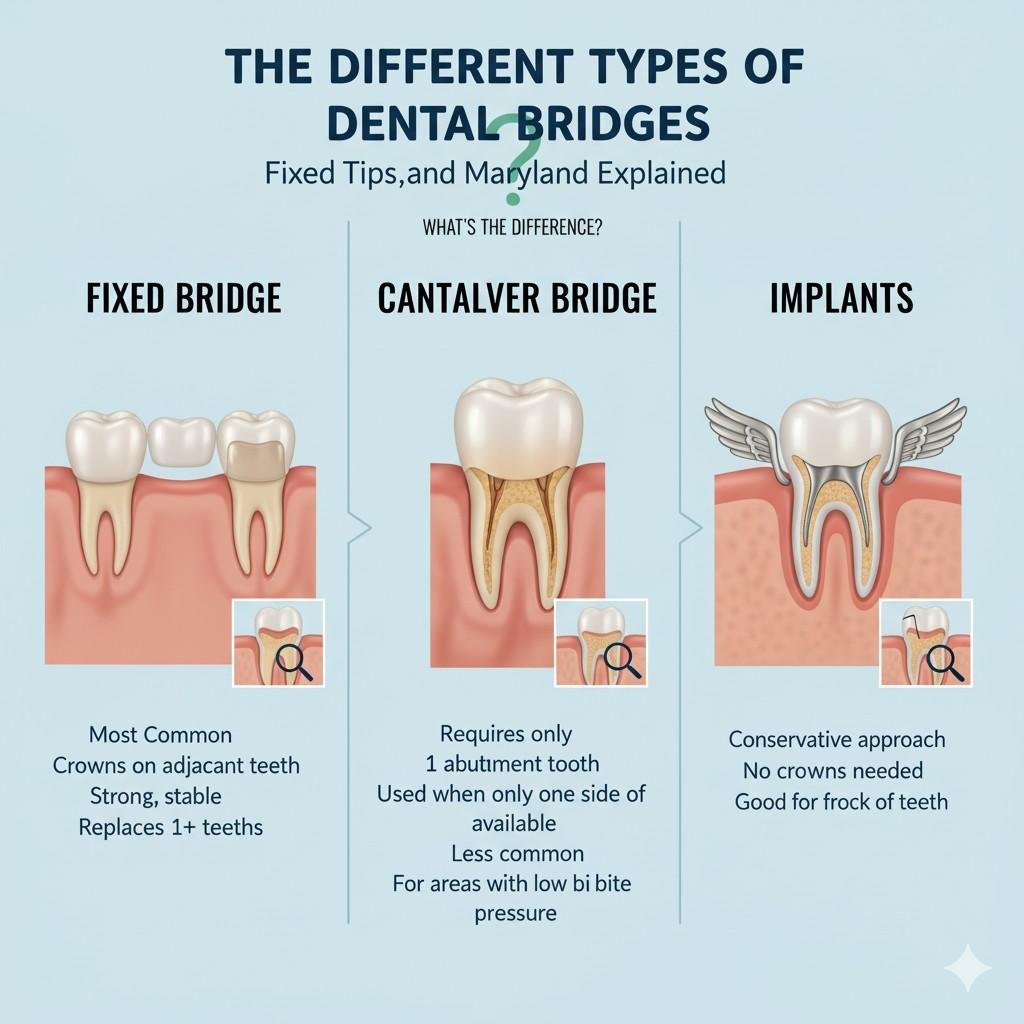
Missing teeth can affect more than just your smile—they can also impact how you speak, chew, and even how your jaw functions over time. Fortunately, modern dentistry offers effective solutions to restore both your confidence and oral health. One of the most reliable and time-tested options is a dental bridge, a prosthetic device that fills the gap left by missing teeth. At Smiles On Tomken, we know that choosing the right dental bridge can make a significant difference in comfort, aesthetics, and longevity. Understanding the different types—fixed, cantilever, and Maryland bridges—can help you make an informed decision about which one best suits your needs. What Is a Dental Bridge? A dental bridge literally “bridges” the gap between two teeth. It consists of one or more artificial teeth (called pontics) supported by natural teeth or implants on either side of the gap. The supporting teeth, known as abutment teeth, are often covered with crowns that hold the bridge securely in place. Dental bridges not only restore your smile but also: Improve chewing and speaking ability Prevent surrounding teeth from shifting out of alignment Maintain the shape of your face Restore bite balance and oral function There are several types of dental bridges available, each with unique advantages. Let’s take a closer look at the three most common options. 1. Fixed Dental Bridge A fixed bridge, also known as a traditional bridge, is the most common and widely used type. It consists of one or more pontics anchored by crowns on the abutment teeth on both sides of the missing tooth or teeth. How it works: Your dentist prepares the adjacent teeth by reshaping them to fit crowns. The custom bridge—crafted to match your natural teeth—is then cemented permanently in place, creating a strong and seamless restoration. Advantages: Provides excellent stability and strength Offers a natural look and feel Long-lasting with proper care (typically 10–15 years or more) Suitable for replacing one or more missing teeth in a row Considerations: Requires removal of some enamel from the supporting teeth to place crowns Relies on the strength and health of surrounding teeth A fixed dental bridge is ideal for patients with healthy adjacent teeth and those looking for a durable, natural-looking solution. 2. Cantilever Dental Bridge A cantilever bridge is similar to a fixed bridge, but it’s supported by a crown on only one adjacent tooth rather than two. This type of bridge is used when there is only one natural tooth next to the gap—typically at the back of the mouth. How it works: The pontic is attached to a crown placed on the supporting tooth, extending over the space where the missing tooth was. Advantages: Requires less preparation than a traditional bridge A good option when only one side of the missing tooth has a healthy adjacent tooth Considerations: Not as strong as a traditional bridge due to one-sided support May place extra stress on the abutment tooth Generally recommended for low-pressure areas, such as front teeth, rather than molars A cantilever bridge can be an excellent choice for patients missing a single tooth with only one suitable adjacent tooth for support. 3. Maryland Dental Bridge A Maryland bridge, also known as a resin-bonded bridge, offers a more conservative alternative to the traditional bridge. Instead of using crowns, it uses a metal or porcelain framework with wings that are bonded to the back surfaces of the adjacent teeth. How it works: The artificial tooth (pontic) is attached to the framework, which is then bonded using dental resin. This method requires minimal alteration to the surrounding teeth, preserving most of the natural enamel. Advantages: Minimally invasive—little to no enamel removal More affordable than traditional bridges A good option for replacing front teeth, where chewing pressure is lighter Considerations: Not as strong as a fixed bridge; may loosen over time The metal framework can sometimes cause slight discoloration of the supporting teeth Best suited for patients with healthy, strong adjacent teeth and good bite alignment The Maryland bridge is often chosen for patients seeking a conservative, aesthetic solution for missing front teeth. Which Bridge Is Right for You? The ideal type of dental bridge depends on several factors, including: The location of the missing tooth The condition of the surrounding teeth Your bite alignment and oral health Your budget and cosmetic goals At Smiles On Tomken, our dental team evaluates each patient’s unique situation to recommend the most suitable option. Whether you need the strength of a fixed bridge, the simplicity of a cantilever bridge, or the minimally invasive approach of a Maryland bridge, we ensure your restoration feels comfortable and looks completely natural. Caring for Your Dental Bridge No matter which type you choose, proper care is essential to ensure your bridge lasts for years. Here are a few key tips: Brush twice daily with a soft-bristled toothbrush and fluoride toothpaste. Floss carefully around and under the bridge using a floss threader or water flosser. Visit your dentist regularly for cleanings and checkups. Avoid biting on hard foods or objects to prevent damage. Good oral hygiene and routine dental visits will keep your bridge strong, functional, and beautiful. Final Thoughts Dental bridges are a reliable, time-tested way to restore missing teeth and regain confidence in your smile. Whether you choose a fixed, cantilever, or Maryland bridge, each option offers unique benefits designed to meet your specific dental needs. At Smiles On Tomken, we’re dedicated to helping you achieve a healthy, complete, and radiant smile through personalized care and advanced restorative solutions. Schedule a consultation with our experienced dental team today to find out which type of bridge is right for you.
Are Composite Fillings Safe? Facts You Should Know
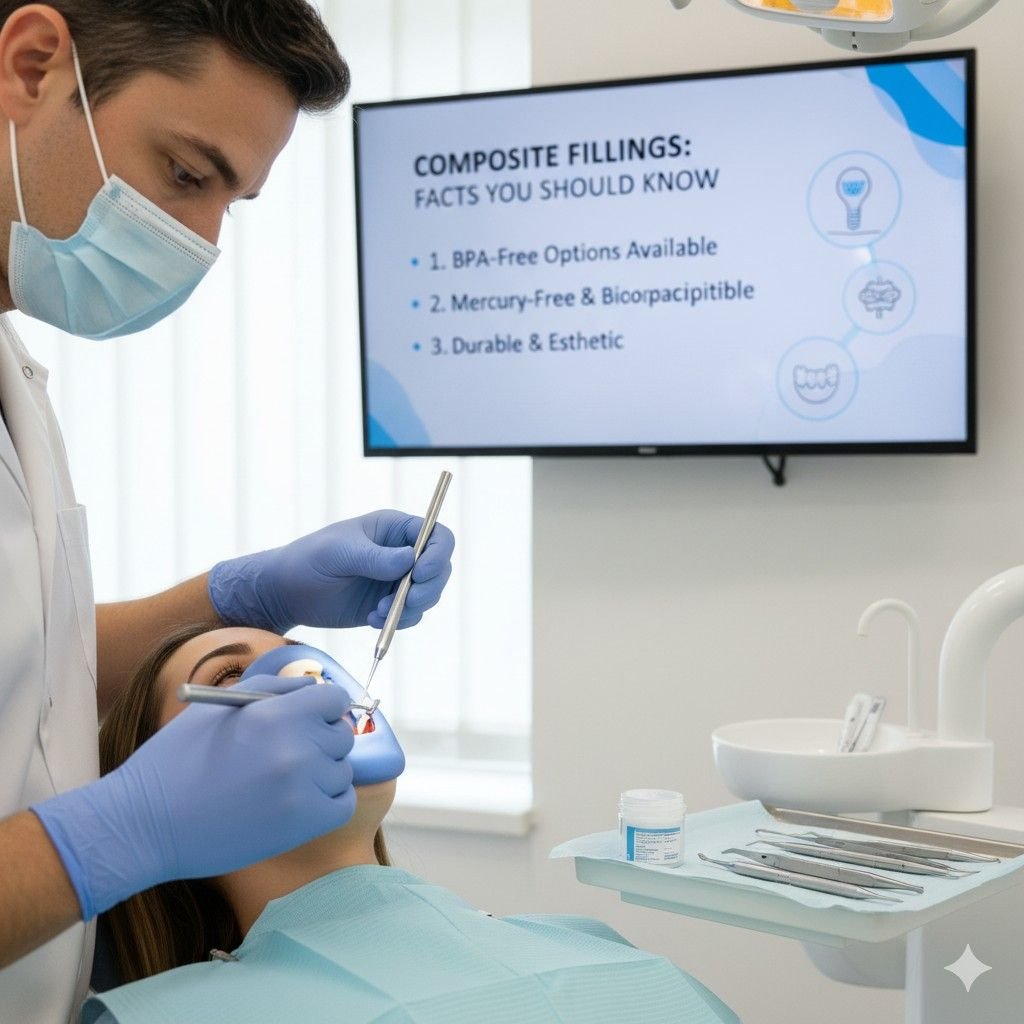
When you hear the words “you have a cavity,” the next step usually involves getting a filling. But with so many options available, it’s natural to wonder what materials are used—and more importantly, whether they’re safe. At Smiles On Tomken, one of the most common questions we hear from patients is: “Are composite fillings safe?” The short answer is yes, composite fillings are safe and widely used in modern dentistry. In fact, they’re one of the most popular choices for restoring decayed or damaged teeth—not only because of their safety but also for their aesthetic benefits. Let’s take a closer look at what composite fillings are, how they compare to other materials, and why they’re considered a safe and effective solution. What Are Composite Fillings? Composite fillings—also known as tooth-coloured fillings—are made from a mixture of resin (plastic) and glass or ceramic particles. This combination creates a strong, durable material that closely matches the natural colour of your teeth. As a result, composite fillings blend in seamlessly with your smile, making them a great option for both front and back teeth. They are used to: Repair cavities Fix chipped or broken teeth Close gaps between teeth Reshape teeth for cosmetic purposes Are Composite Fillings Safe? Yes, composite fillings are considered safe by dental professionals and major health organizations, including the Canadian Dental Association (CDA) and the American Dental Association (ADA). Here are a few reasons why they’re considered safe: Mercury-Free Material Unlike traditional silver (amalgam) fillings, composite fillings contain no mercury. This is a big reason why many patients—and dentists—prefer them. Although amalgam fillings are still considered safe by many authorities, some individuals choose to avoid mercury for personal health and environmental reasons. Biocompatibility Composite materials are biocompatible, meaning they are generally well-tolerated by the body. Allergic reactions are extremely rare, but if you have known sensitivities or health concerns, our team at Smiles On Tomken can help assess what’s best for your needs. Safe for All Ages Composite fillings are safe for children, teens, adults, and seniors. In fact, they are often the preferred choice for pediatric dental care because they are less noticeable and require less tooth removal. Benefits of Composite Fillings Beyond safety, composite fillings offer several benefits that make them an attractive option for patients seeking both form and function. ✔ Natural Appearance The biggest advantage of composite fillings is that they match your natural tooth colour, making them ideal for visible areas of your mouth. Once placed, they are virtually invisible. ✔ Minimally Invasive Composite resin bonds directly to your tooth, allowing for a more conservative treatment. Less drilling means more of your natural tooth is preserved. ✔ Versatile Use Composite material can be used not only for fillings but also for cosmetic improvements like reshaping teeth or repairing chips. ✔ Strong and Durable Modern composites are durable and can last many years, especially with good oral hygiene and regular dental checkups. Are There Any Downsides? Like all dental materials, composite fillings have a few limitations to consider: Slightly Less Durable Than Amalgam: In some cases—particularly with large fillings in back molars—composite may wear faster than metal. However, advances in material technology have greatly improved their strength. Slightly More Expensive: Composite fillings may cost a bit more than amalgam, but many patients find the natural look well worth the difference. Technique-Sensitive: Proper placement requires a dry field and more time, which is why it’s important to have them done by an experienced dental team—like ours at Smiles On Tomken. How Long Do Composite Fillings Last? With proper care, composite fillings can last 7 to 10 years or more. Factors like oral hygiene, diet, teeth grinding, and the size of the filling can affect longevity. Regular checkups help monitor your fillings and ensure they’re holding up well. What Happens During a Composite Filling Procedure? Getting a composite filling is a straightforward process. Here’s what to expect at Smiles On Tomken: Numbing the Area: Local anesthesia is used to keep you comfortable. Removing Decay: The damaged part of the tooth is carefully cleaned out. Placing the Filling: Composite resin is applied in layers, cured with a special light, then shaped and polished to match your tooth. Bite Adjustment: We check your bite and make adjustments so your teeth come together comfortably. You can eat and drink shortly after the procedure, although we recommend waiting until the numbness wears off completely. Final Thoughts Composite fillings are a safe, attractive, and reliable solution for treating cavities and restoring damaged teeth. They provide excellent performance and blend in beautifully with your natural teeth—without the use of metals or mercury. At Smiles On Tomken, your health and safety are our top priorities. If you have concerns about your fillings or want to learn more about your options, we’re here to help you make the best choice for your smile. Need a Filling or Want to Replace Old Ones? Book an appointment with Smiles On Tomken today and let our experienced dental team provide you with high-quality, personalized care. 📞 Call us or 📅 book online—we’re here to help you smile with confidence!